What Is Holographic Laser Film?
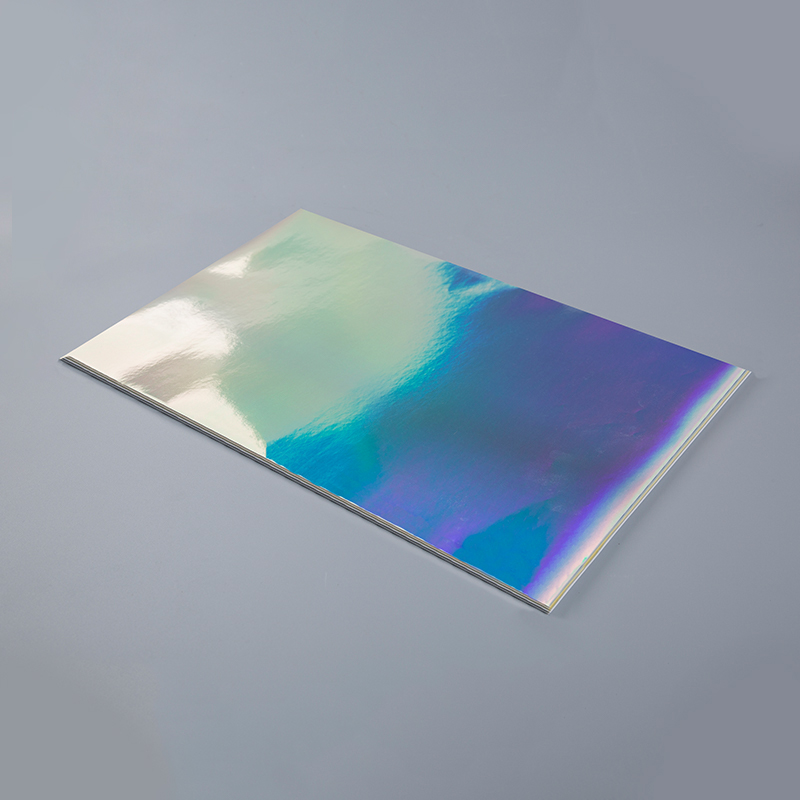
Holographic laser film is a specialized optical material that diffracts light to produce vivid, rainbow-like visual effects. Unlike conventional reflective films, it encodes microscopic interference patterns — called diffraction gratings — directly onto its surface. When light hits these patterns, it breaks into its spectral components, generating the signature shifting colors that catch the eye. This combination of visual drama and functional complexity makes holographic laser film one of the most versatile materials in modern manufacturing, spanning industries from luxury packaging to document security.
The film itself is typically composed of multiple ultra-thin layers: a base substrate (usually PET polyester), a photosensitive or embossable recording layer where the holographic pattern lives, a reflective metallized coating (commonly aluminum), and a protective topcoat or adhesive layer depending on the intended end use. Each layer plays a critical role in both the aesthetic output and the durability of the finished product.
The Core Manufacturing Process
Producing holographic laser film is a highly precise, multi-stage industrial process that blends photonics, chemistry, and mechanical engineering. The production workflow can be broken down into several key stages.
Step 1 — Master Origination
Everything begins with creating a holographic master. Engineers use high-powered laser beams — often from an argon-ion or solid-state laser — to expose a photosensitive recording medium such as a silver halide plate or photoresist. Two or more coherent laser beams intersect at precise angles, creating an interference pattern that is permanently etched into the medium at nanometer-scale precision. This master encodes the diffraction grating structure that will define the visual effect of the final film: whether it displays a 2D/3D image, a rainbow spectrum, a dot-matrix pattern, or a custom graphic.
Step 2 — Nickel Shim Electroforming
The photoresist master is chemically developed and then coated with a thin conductive silver layer via electroless plating. It is then submerged in an electroforming bath where nickel ions deposit uniformly onto the surface, building up a rigid metal shim that is an exact negative replica of the master's microscopic surface topography. This nickel shim — often called a stamper or embossing die — is the tool that will transfer the holographic pattern to film at industrial scale and can survive millions of impression cycles.
Step 3 — Embossing onto Film
The nickel shim is mounted onto a continuous roll-to-roll embossing machine. A PET base film pre-coated with a thermoplastic or UV-curable lacquer passes under the heated shim at high speed. Under controlled temperature and pressure, the microscopic grating pattern is mechanically pressed into the softened coating, replicating it across the full width of the film web. UV embossing lines can run at speeds exceeding 100 meters per minute, enabling high-volume production with nanometer-level fidelity.
Step 4 — Vacuum Metallization
To make the embossed diffraction grating optically reflective and visible in ambient light, the embossed film is fed into a high-vacuum deposition chamber. Aluminum wire is vaporized using resistive heating or electron beam guns, and the aluminum vapor condenses onto the embossed lacquer surface in a perfectly uniform, ultra-thin layer typically 30–60 nanometers thick. This metallized layer is what gives holographic film its brilliant, mirror-like reflectivity while remaining flexible and lightweight. For certain security or transparent applications, a demetallization step can selectively remove aluminum to create clear windows or patterns within the holographic surface.
Step 5 — Coating, Laminating, and Slitting
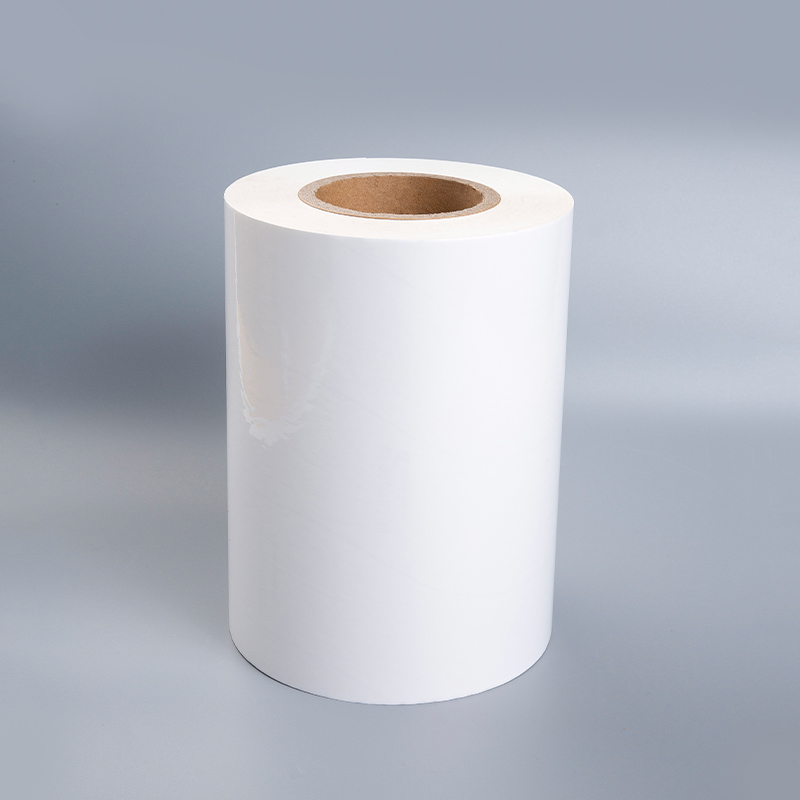
Depending on the intended application, the metallized film receives additional functional coatings: heat-seal adhesive for hot stamping foil, pressure-sensitive adhesive for labels, or a printable topcoat for further graphic overprinting. The film is then slit from wide master rolls into narrower customer-specified widths and wound onto cores for shipment. Quality control at this stage involves optical diffraction angle measurement, adhesion testing, and visual uniformity checks under standardized lighting.
Key Variations and Technical Types
Not all holographic laser film is identical. Manufacturers produce several distinct variants tailored to different performance needs:
- Rainbow / Spectral Film: The most common type, producing continuous color shifts across the full visible spectrum as the viewing angle changes. Widely used in decorative and packaging applications.
- Dot-Matrix Holographic Film: Uses computer-generated dot arrays to create complex 3D images or animated effects. Higher security value and frequently specified for banknotes and ID documents.
- True 2D/3D Holographic Film: Encodes actual depth information recorded from physical objects or computed models, producing genuine three-dimensional imagery visible without special glasses.
- Transparent Holographic Film: Partially or fully demetallized versions that allow underlying print or substrate colors to show through, used extensively in window stickers and transparent label applications.
- Hot Stamping Foil: A transfer-format holographic film designed to bond to paper, card, or plastic surfaces under a heated die, leaving only the holographic layer behind without any carrier substrate.
Primary Application Scenarios
Holographic laser film's unique combination of visual appeal, material thinness, and anti-counterfeiting complexity makes it valuable across a surprisingly wide range of industries. The following table summarizes the most important deployment sectors:
| Industry | Typical Use | Key Benefit |
| Packaging | Carton wraps, flexible pouches, shrink sleeves | Shelf differentiation, brand premium |
| Security & Authentication | Banknotes, passports, tax stamps, ID cards | Impossible to replicate with desktop equipment |
| Labels & Stickers | Product authentication seals, void labels | Tamper evidence, consumer trust |
| Cosmetics & Luxury Goods | Perfume boxes, watch packaging, gift wrapping | High perceived value, tactile premium feel |
| Textiles & Fashion | Fabric laminate, patches, accessories | Dynamic visual effect under runway or event lighting |
| Printing & Publishing | Book covers, greeting cards, event tickets | Eye-catching finish without UV spot coating cost |
| Electronics | Device skins, warranty seals, asset tags | Brand identification + tamper indication |
Security Applications in Depth
Among all use cases, anti-counterfeiting is arguably where holographic laser film delivers the highest strategic value. Government agencies and brand owners rely on it because the master origination process requires specialized laser labs, photoresist chemistry, and electroforming equipment that costs hundreds of thousands of dollars — effectively pricing out low-level counterfeiters. Modern security holograms incorporate several layers of covert authentication beyond what the naked eye can detect:
- Overt features: Visible rainbow color shifts and 3D imagery that any consumer can recognize without tools.
- Covert features: Micro-text, hidden images, or polarization-dependent elements visible only under a loupe, UV lamp, or laser pointer.
- Forensic features: Unique chemical or spectral markers embedded during production, detectable only in laboratory conditions with specialized equipment.
Holographic tax stamps on alcohol, tobacco, and pharmaceutical products are one of the most widespread government applications, with dozens of national revenue authorities mandating their use to protect excise income and consumer safety simultaneously.
Factors to Consider When Selecting Holographic Laser Film
Choosing the right holographic film specification requires balancing several technical and commercial parameters. Buyers should evaluate the following before placing an order with a converter or film manufacturer:
- Substrate compatibility: Ensure the adhesive or heat-seal system is formulated for your target surface — paper, PVC, PP, or PE behave very differently under lamination or hot stamping conditions.
- Pattern exclusivity: Standard catalog patterns are more affordable but shared across clients. A proprietary master gives brand-exclusive visual identity and stronger anti-counterfeiting protection.
- Minimum order quantities: Custom origination typically requires higher MOQs to amortize the master cost. Standard patterns can be ordered in smaller roll quantities.
- Regulatory compliance: Films used in food packaging must meet FDA, EU 10/2011, or equivalent food-contact migration standards. Security document films must pass national printing authority specifications.
- Environmental performance: Consider operating temperature ranges, UV stability for outdoor applications, and whether the film must be recyclable or compatible with your waste stream.
Future Trends in Holographic Film Technology
The holographic film industry continues to evolve rapidly. Digital laser origination systems now allow engineers to design custom diffraction patterns computationally and expose them directly to photoresist without traditional optical setups, dramatically reducing lead times for new designs. Color-on-demand holography — where specific zones of film display defined, stable colors rather than shifting spectra — is increasingly specified by luxury brands seeking precise color-matched packaging effects.
Sustainability is also reshaping product development. Manufacturers are developing holographic films on bio-based PET substrates, water-based adhesive systems, and aluminum-free interference coatings using high-refractive-index dielectric materials. These advances allow brands to retain the premium visual impact of traditional holographic film while meeting increasingly strict extended producer responsibility legislation in Europe and Asia. As digital authentication systems mature, holographic films are also being integrated with QR codes, NFC chips, and blockchain-linked serialization to create multi-layer authentication ecosystems that link physical packaging to digital product passports.